As part of British Gas’s multi-year digital transformation, I led the UX/UI redesign of the British Gas Business website, a major initiative that formed one arm of the broader modernisation effort spanning both the Business and Residential Energy divisions.
The goal was to unify the company’s fragmented web presence, modernise the look and feel, and improve usability across multiple customer touchpoints from acquisition to self-service. Working closely with senior product and marketing leads, I conducted audits, research, and iterative redesigns that streamlined navigation, introduced responsive layouts, and aligned the brand with British Gas’s evolving digital identity.
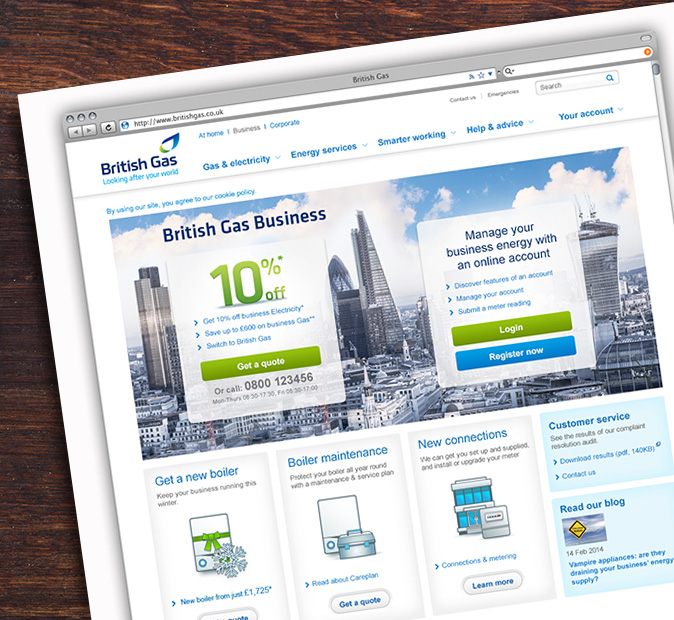
The legacy British Gas Business website had become bloated, inconsistent, and visually outdated. Navigation was confusing, with redundant content and disjointed user flows between sales, support, and account management. The mobile experience was particularly weak, reflecting a site built before responsiveness was standard. The redesign needed to:
The project also required balancing brand consistency with performance and SEO imperatives while coordinating across multiple internal teams.
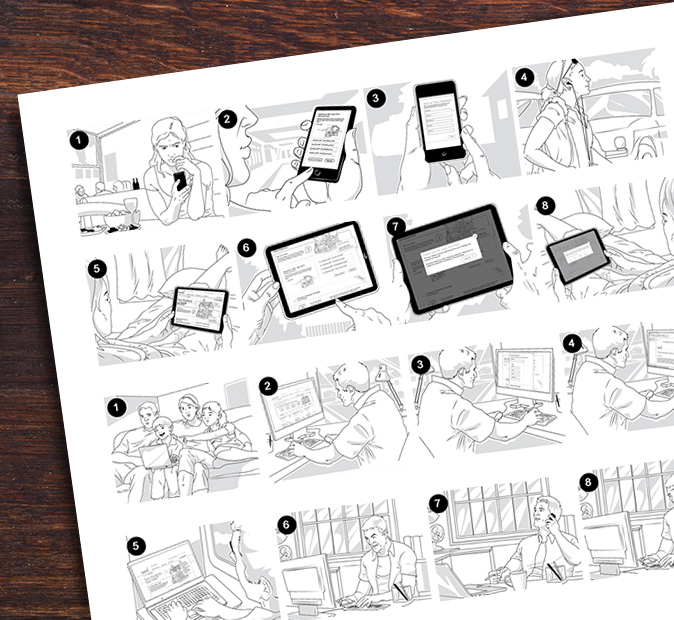
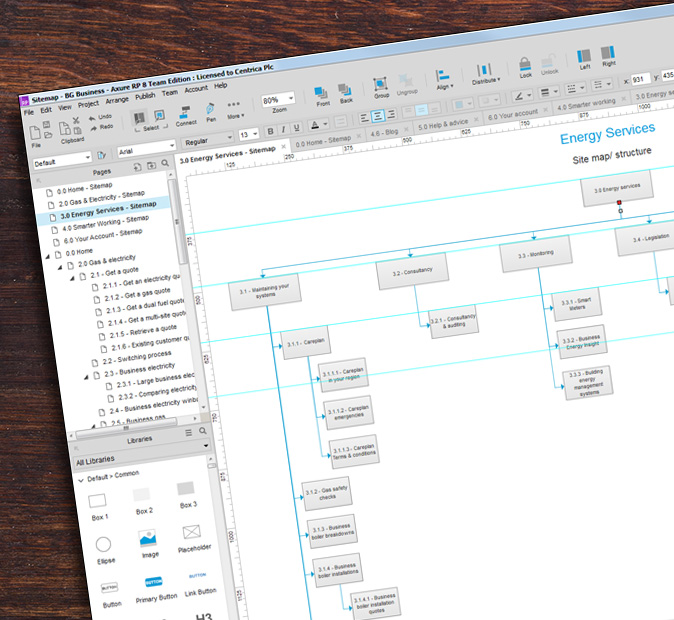
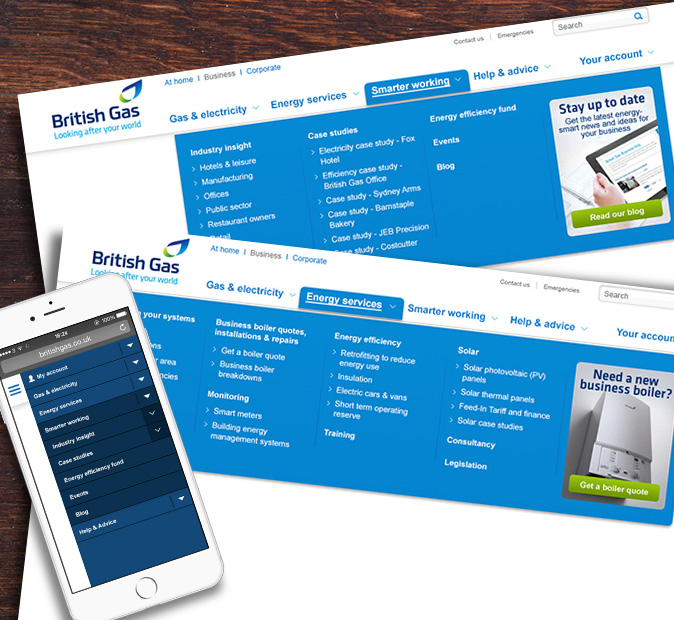
I began with a sitewide UX audit, mapping the information architecture and identifying navigation pain points. Using analytics, heatmaps, and scroll-depth data, I prioritised pages and content that accounted for 80% of user activity.
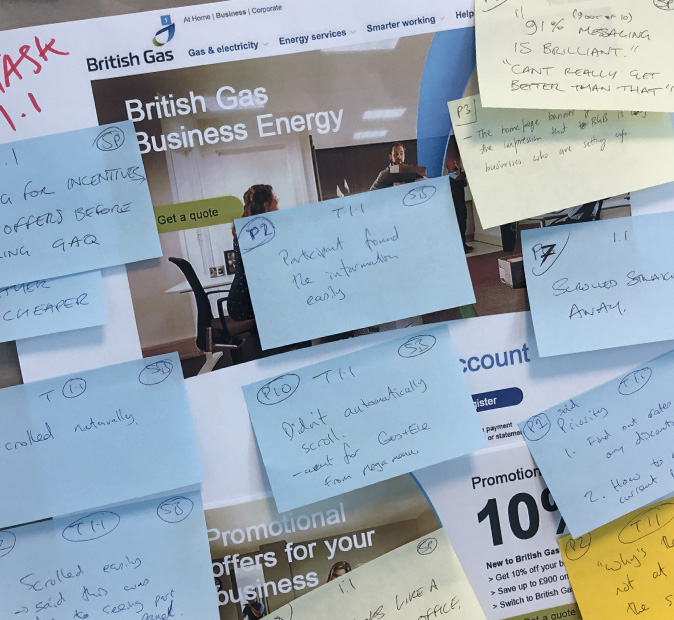
I facilitated stakeholder workshops with marketing, service, and content teams to clarify business objectives and identify content overlaps. In parallel, I ran usability testing with existing and prospective customers to understand behavioural friction particularly around navigation hierarchy, content discoverability, and mobile engagement.
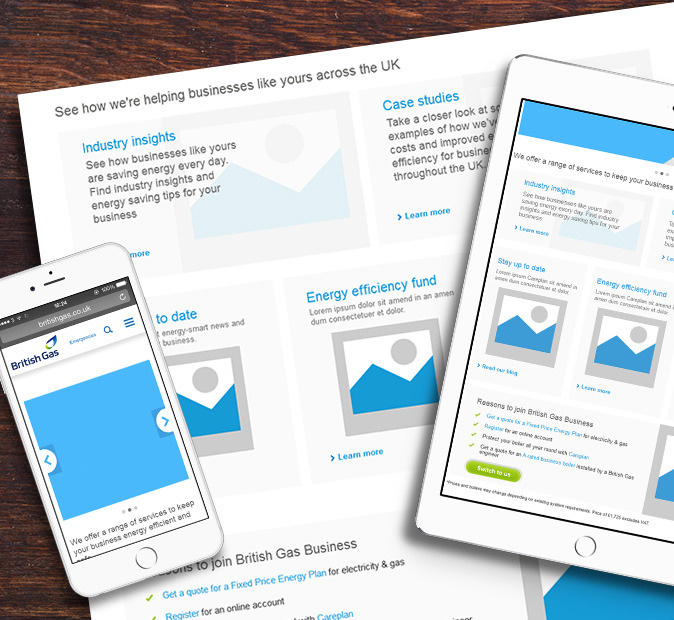
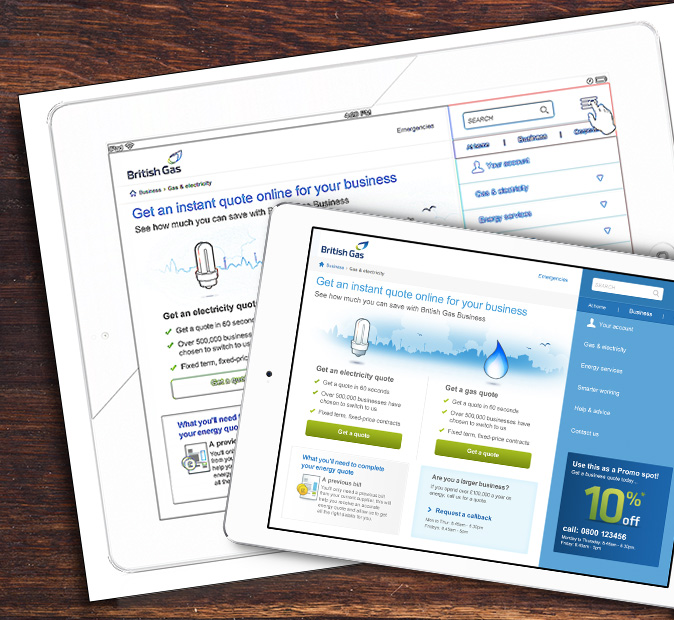
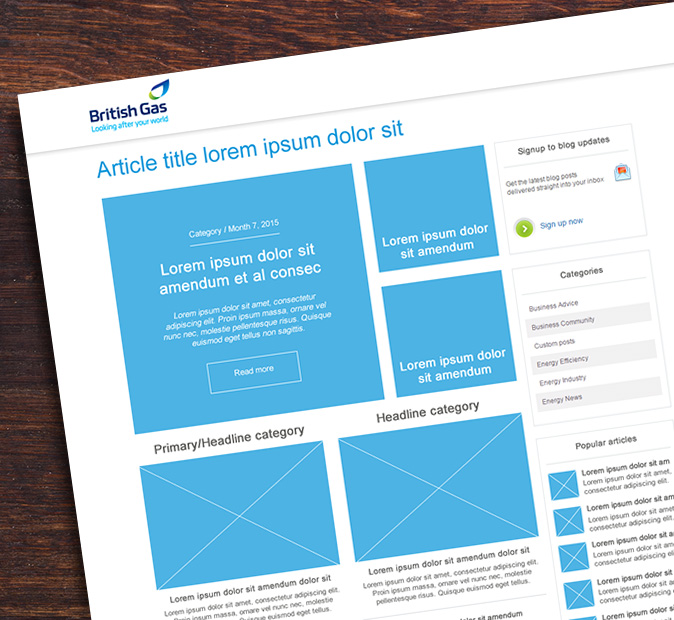
Wireframes and prototypes were created in Axure and Figma, iterated through multiple rounds of feedback from internal stakeholders and end users. I collaborated with the development and brand teams to ensure the UI met both performance benchmarks and brand accessibility standards (colour contrast, font sizes, and ADA alignment).
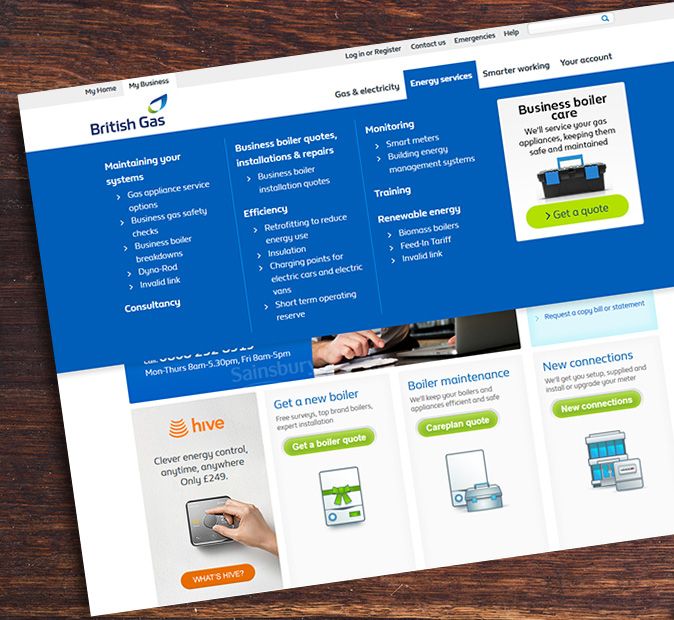
The final design delivered a unified, modular interface that brought together passenger screening, target & profile management, and user-administration functions under a single visual language. A new navigation framework allowed officers to move seamlessly between passenger records, flight events, and alerts, while contextual data views made it easier to understand why a traveller was flagged.
The site was progressively rolled out, allowing data collection and iteration without service disruption.
The redesign succeeded in bringing clarity, consistency, and responsiveness to one of British Gas’s most visible digital properties. It became the foundation for future digital programmes, enabling more cohesive collaboration between British Gas Business and the Residential Energy division. The overhaul improved mobile engagement by over 60%, reduced site exits from key product pages, and established reusable frameworks that later informed the design of other British Gas digital assets including the Online Account Management (OAM) platform. For me, this project reinforced the power of strategic UX design at scale balancing brand, performance, and usability across multiple business units while contributing to a larger organisational transformation.