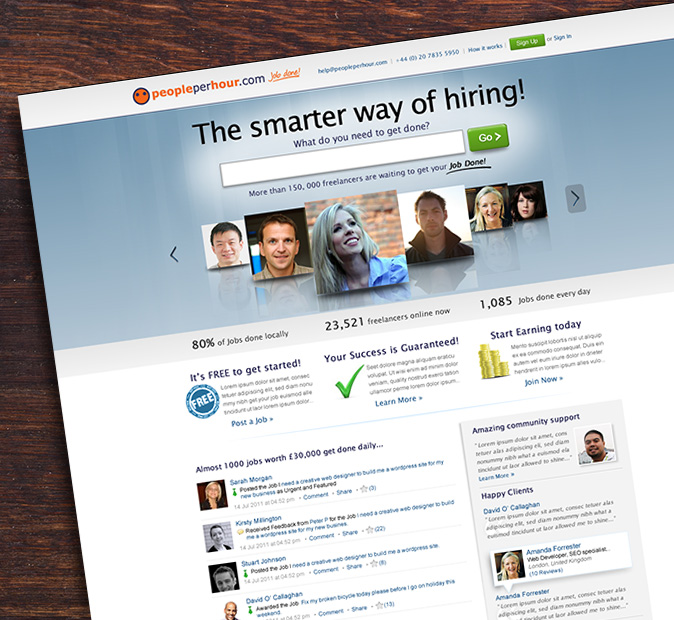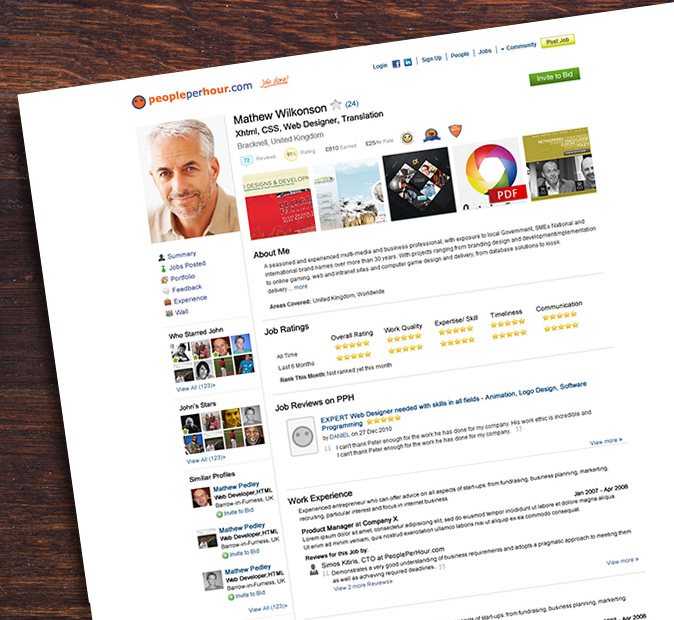
As a Lead UX/UI Designer working directly with the product and development teams at PeoplePerHour, I helped redefine one of the UK’s largest online freelance marketplaces. The platform connects thousands of freelancers and clients daily, enabling project posting, proposal management, payment, and collaboration through a unified SaaS product.
My remit spanned multiple product streams from onboarding and profile creation to search, messaging, payments, and proposal workflows focusing on reducing friction, building trust, and driving repeat engagement.
The design work aimed to make interactions simpler, safer, and more transparent for both freelancers and clients, while unifying the platform’s visual and functional identity.
After years of incremental updates, PeoplePerHour’s product experience had become fragmented. User journeys were inconsistent across devices, search and filtering logic was opaque, and there were visible trust barriers between clients and freelancers especially around payments, project visibility, and communication. The challenge was to: Modernise the product’s UI for responsiveness and accessibility. Create a consistent design language across the entire user journey. Simplify onboarding and job posting to improve activation and retention. Build confidence between users by clarifying proposal, messaging, and payment states. The platform had to balance transparency and security with speed and ease of use, maintaining strong brand recognition while evolving the product’s usability standards.
I began by conducting UX audits of core journeys, supported by analytics and user feedback from customer service data.
This informed a prioritised roadmap of pain points affecting both freelancers and clients.
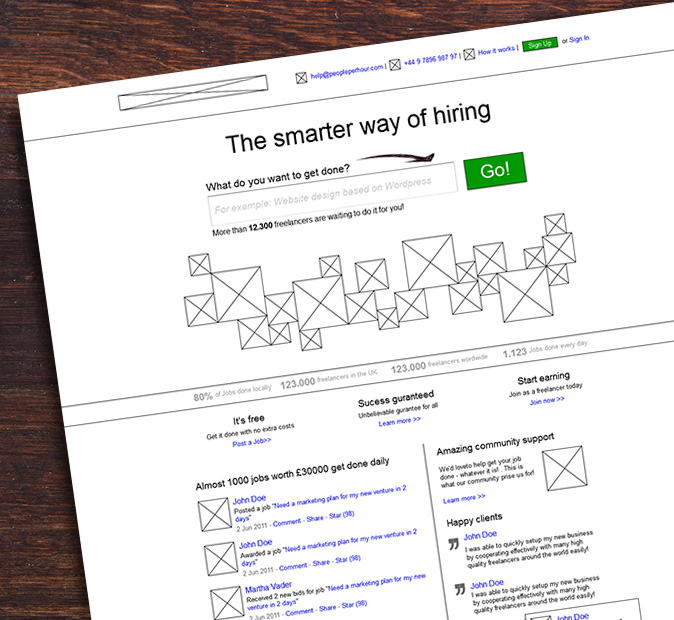
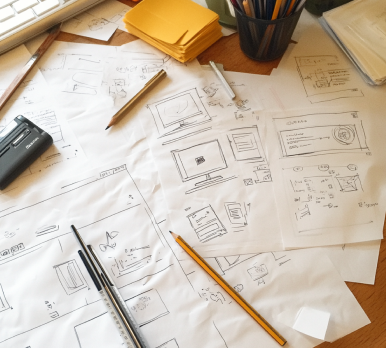
Working closely with the Head of Product and Engineering Lead, I created wireframes and high-fidelity prototypes covering:
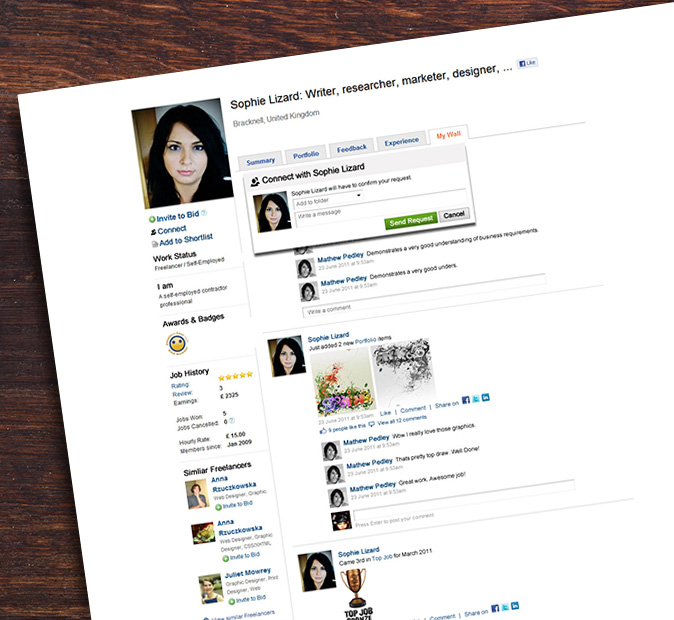
Registration and Onboarding Flows: Simplified for faster setup and clearer skill categorisation.
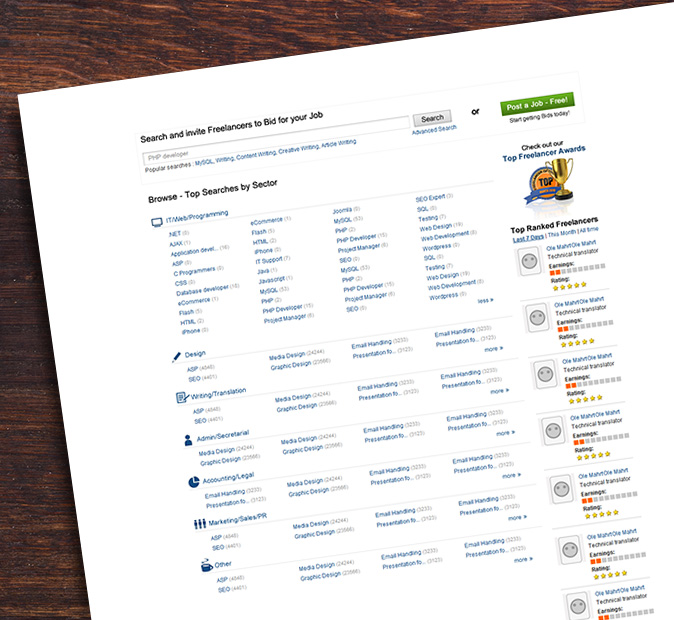
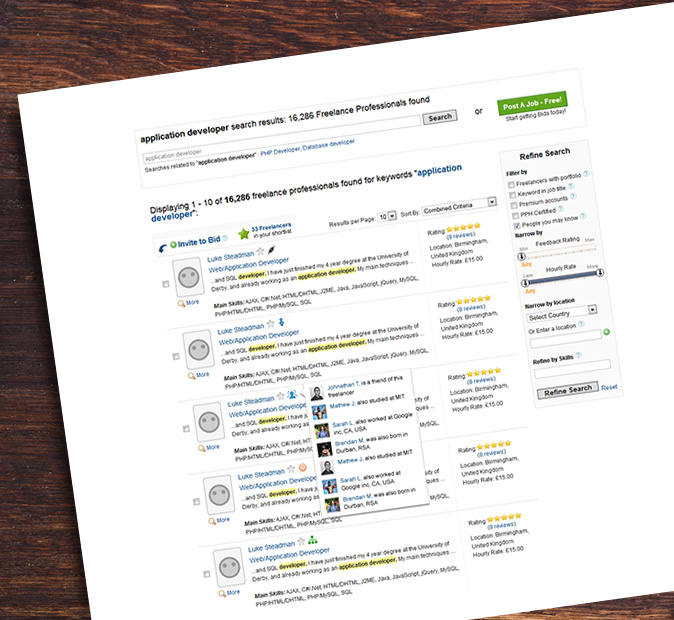
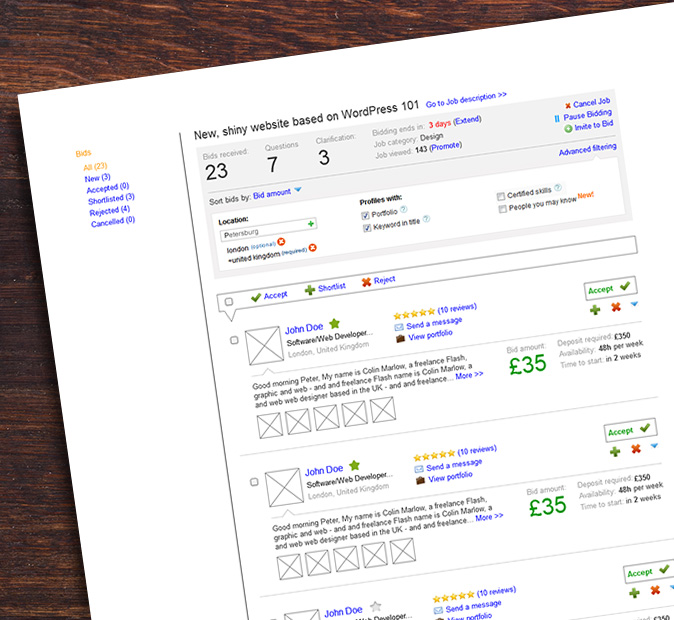
Search & Discovery: Introduced consistent filtering, sorting, and card-based layouts for service browsing.
Proposal & Messaging: Redesigned communication workflows with real-time visual feedback on bid status and client responses.
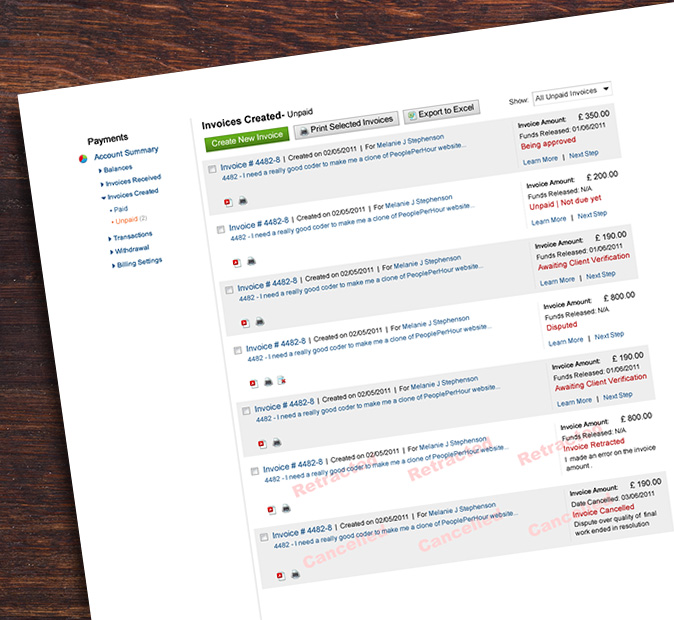
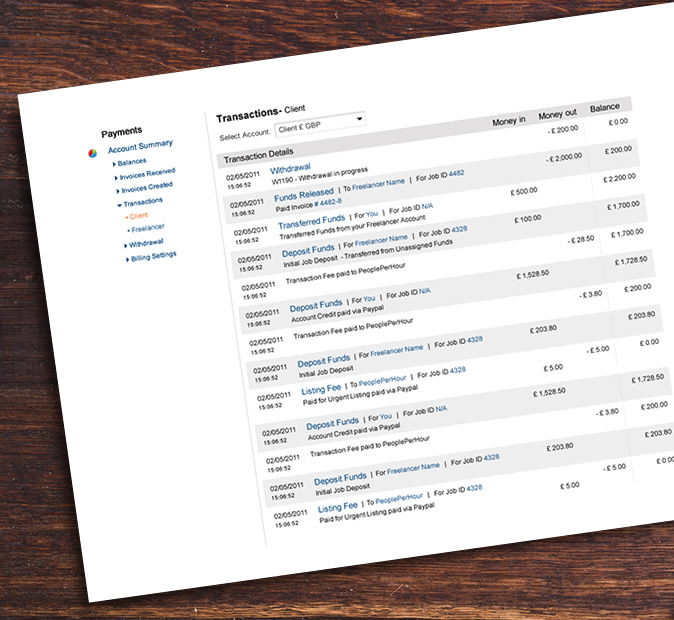
Payments & Escrow: Refined transactional UI for transparency, integrating trust signals and confirmation states.
Collaboration was iterative I participated in agile sprints, providing UI specifications, interaction documentation, and visual guidelines to support the distributed development team.
Throughout, we tested prototypes with active freelancers and clients to validate usability improvements before deployment.
The redesigned marketplace introduced a cleaner, responsive, and unified product experience:
Consistent Design Language: A modular component library applied across search, profile, and messaging tools.
Simplified User Journeys: Streamlined onboarding and proposal submission reduced drop-offs.
Enhanced Trust Indicators: Clear status labels, progress markers, and visual reassurance in escrow/payment flows.
Responsive Framework: Seamless usability across desktop and mobile devices.
Improved Visual Hierarchy: Focused layout prioritising key interactions such as “Post a Project” and “Submit a Proposal.”
The result was a platform that felt faster, safer, and more cohesive, improving user confidence and engagement metrics across core touchpoints.
The design improvements contributed to higher user activation and engagement rates, particularly in the early stages of registration and proposal submission.
By clarifying process states and enhancing transparency, trust between freelancers and clients increased reflected in longer project lifecycles and reduced support queries around payment disputes.
For me, this series of projects represented a pivotal phase in my career merging the precision of SaaS product design with the behavioural nuance of a live marketplace.
It strengthened my ability to design for trust, transparency, and transaction flow, principles that continue to underpin my later work in risk, compliance, and data-driven platforms.