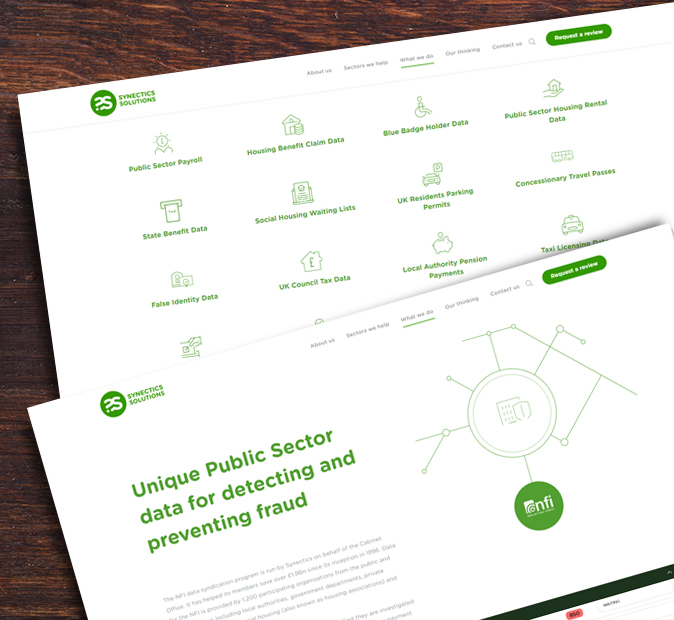
Working in partnership with the Cabinet Office and Synectics Solutions, I led the UX research and redesign of the National Fraud Initiative (NFI) portal, the UK’s central platform for public-sector fraud detection and data matching. The NFI enables local councils, government departments, and audit bodies to compare data sets such as payroll, benefits, and housing to uncover potential fraud and error across the public sector.
As Lead UX/UI Designer, I was responsible for conducting extensive user research, synthesising findings, and designing a modern, accessible interface
The objective was to make a complex investigative process approachable for non-technical users while improving efficiency, accessibility, and trust in the data.
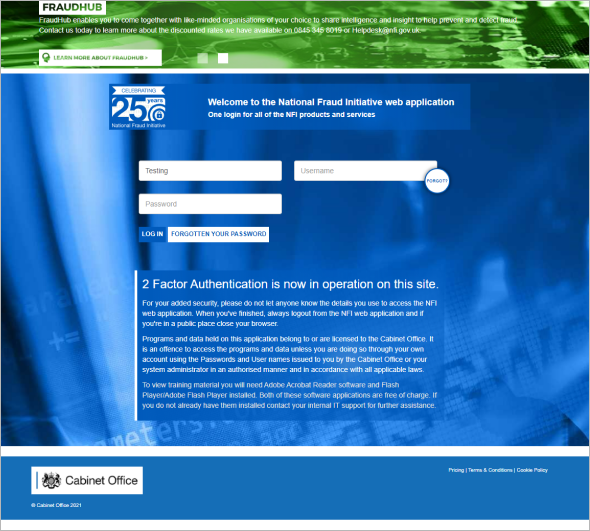
An outdated struggling application
The existing portal was functional but cumbersome. Investigators across councils and departments struggled with a dated interface that made it difficult to filter, interpret, and act on matched data. Accessibility was limited, navigation was inconsistent, and workflows often required multiple clicks or redundant steps to complete basic investigative actions. Critically, recording of confirmed cases was extremely difficult to complete.
The platform served a wide range of users from data analysts to administrative staff with varying levels of technical literacy. The core challenge was to redesign the experience so that any user, regardless of expertise, could review and act on potential fraud cases quickly and confidently while meeting stringent accessibility and security standards
I began with a two-month research phase involving contextual interviews, remote surveys, and usability testing across more than 20 local councils. These sessions uncovered recurring pain points unclear hierarchy, limited search flexibility, and lack of progress visibility within investigations.
Using this data, I created user-journey maps to visualise where friction occurred and prioritised high-impact fixes. From there, I built wireframes and interactive prototypes, testing them iteratively with both technical and non-technical users.
Throughout, I ensured alignment with modern design principles, focusing on readability, accessibility, and scalability. Findings were documented in comprehensive reports presented to Cabinet Office stakeholders to validate design direction.
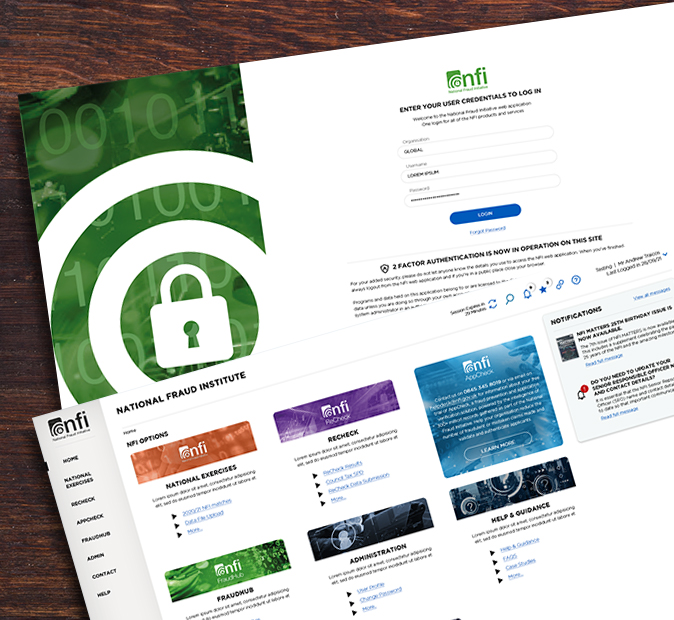
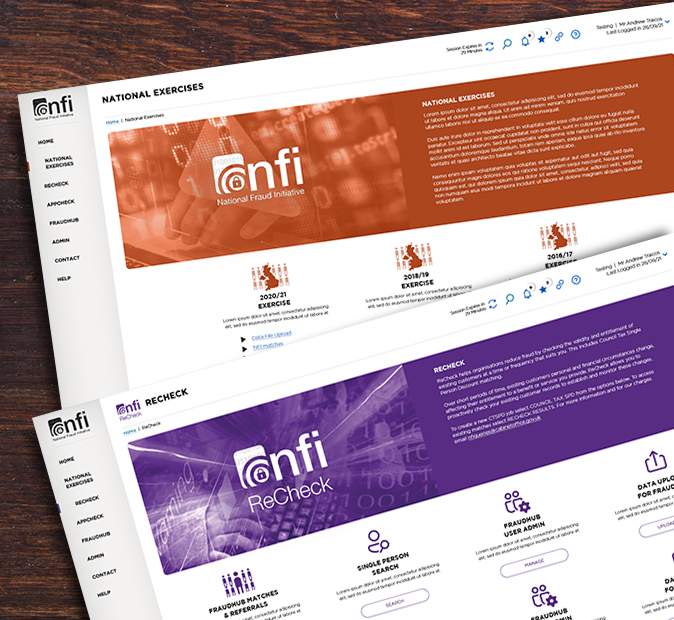
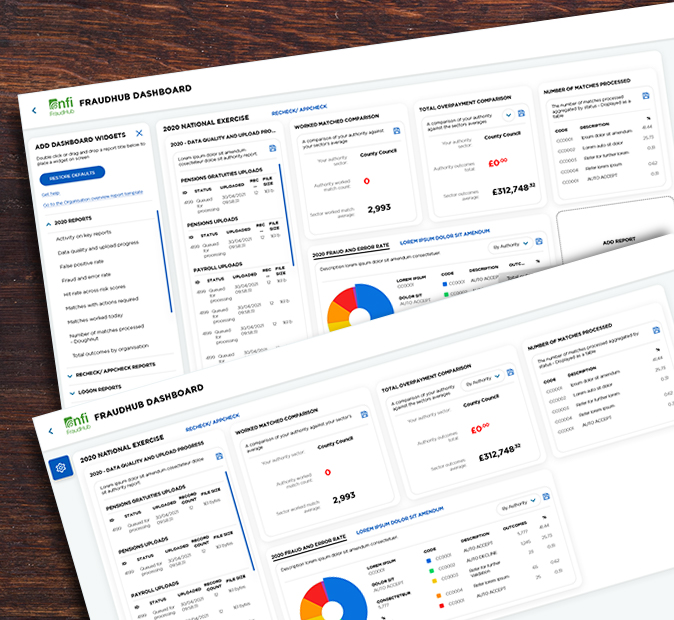
The redesigned portal introduced a clean, task-oriented interface that simplified the entire data-matching and investigation process. Key improvements included: A streamlined dashboard highlighting all features and functions at a glance; Guided workflows for batch processing, lookups and reporting to ensure consistent process across agencies and accuracy of confirmed case entries; Enhanced reporting, user admin, search and filtering, help;
Visual hierarchy and navigation were restructured for clarity, and content was rewritten to match government standards. The final prototype was presented and received positively by stakeholders and formed the foundation for future iterations of the NFI portal.
Improved menu and navigation
Defined sections for key functionality and tools
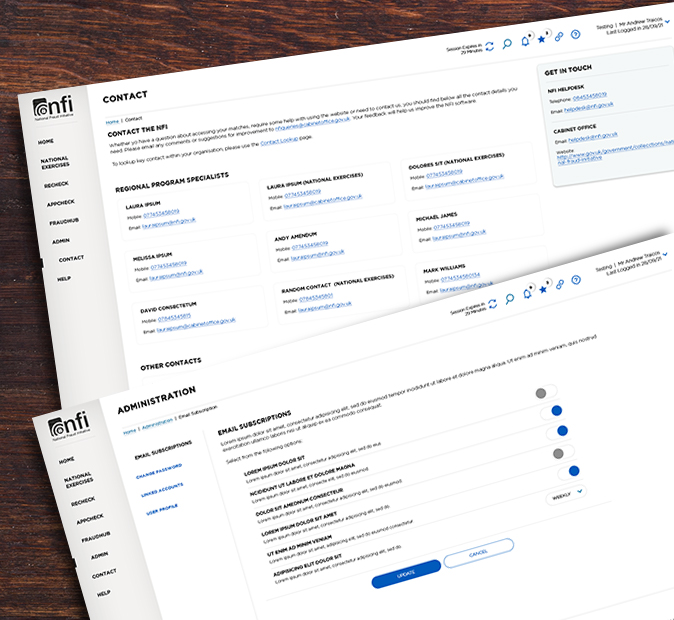
Reorganisation of key contact and admin tools
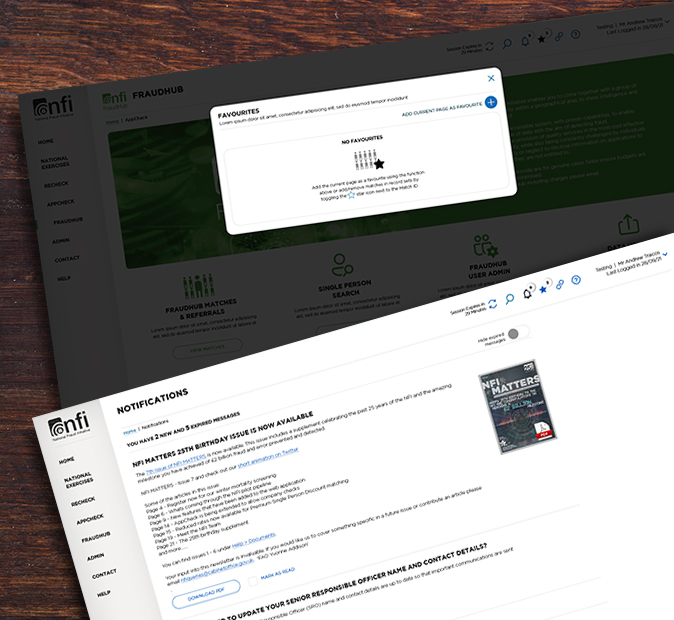
Notification and subscription management
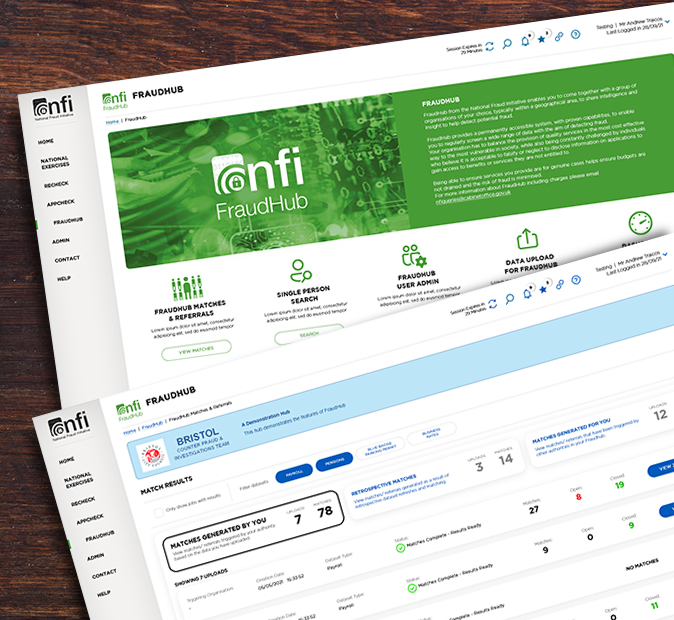
Complete redesign of NFI toolkit
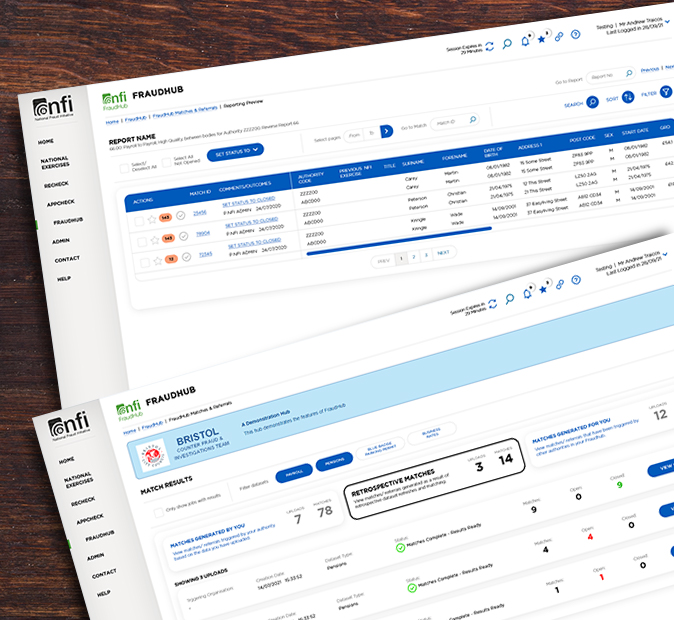
Improved batch upload flows and referral management
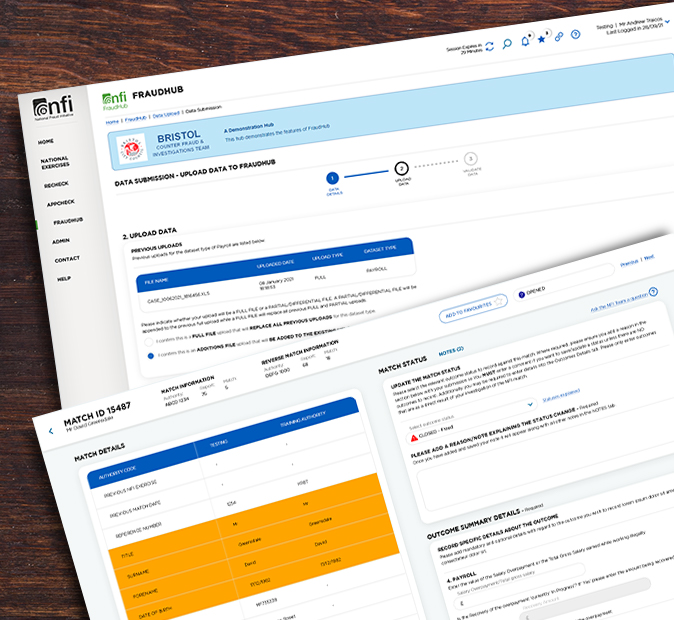
Improved fraud reporting flows
Vastly improved reorting dashboard
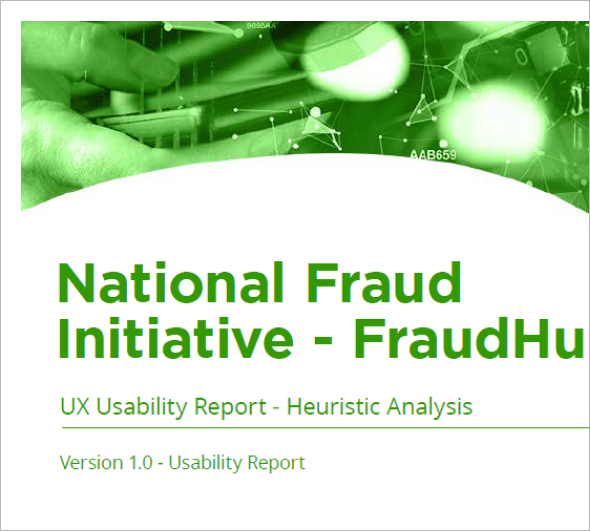
One of many research reports
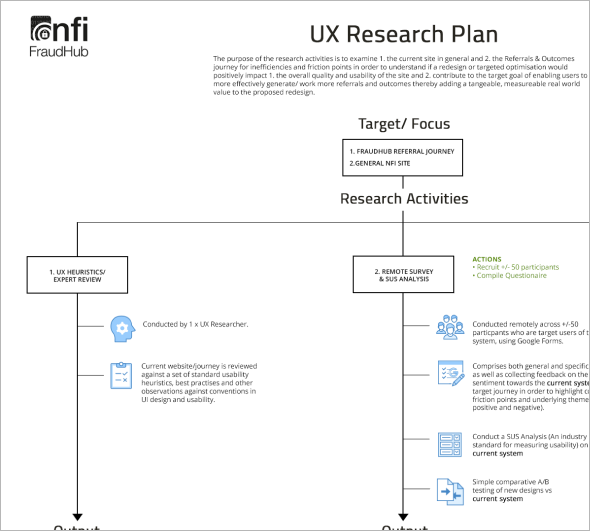
A snippet of my research plan
This project demonstrated the impact of evidence-based design in public-sector software. By engaging directly with end-users across diverse roles, the redesign addressed real-world inefficiencies that affected both productivity and compliance. The new proposed portal dramatically improved accuracy, financial outcomes, usability for non-technical investigators and reinforced the importance of accessibility in high-trust environments as well as improving confirmed-case recording to close the loop for measured savings. The approach and findings were later used to guide an ongoing stream of UX improvements by the Cabinet Office establishing a consistent, user-centred approach for fraud and compliance systems across government.