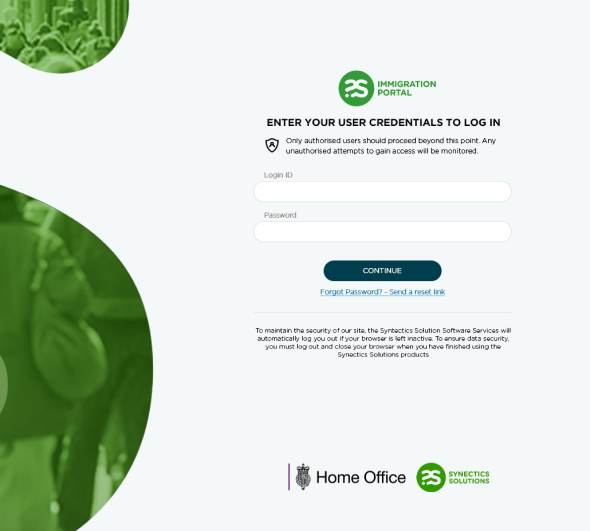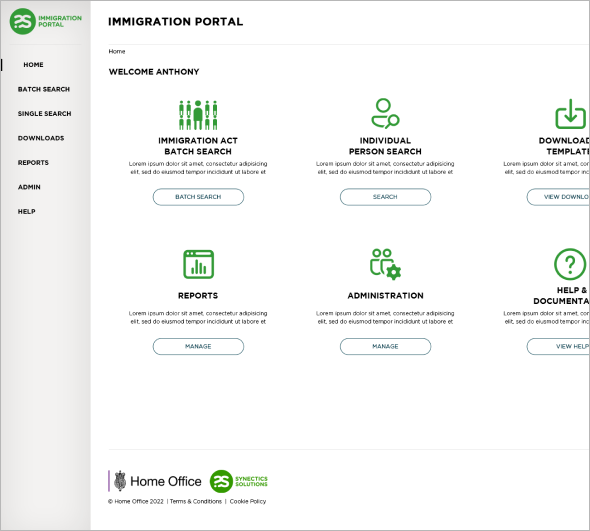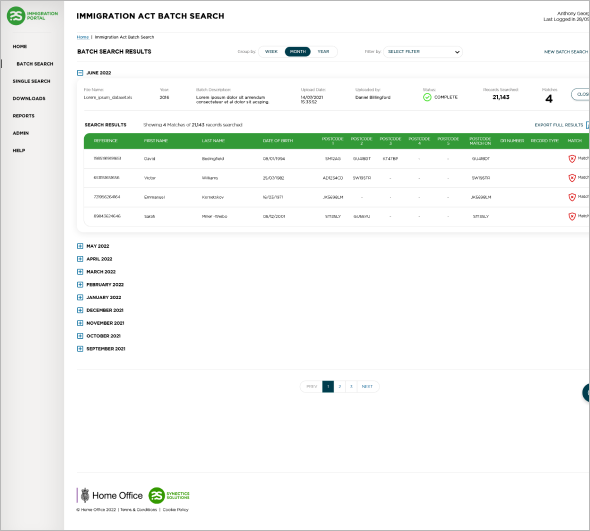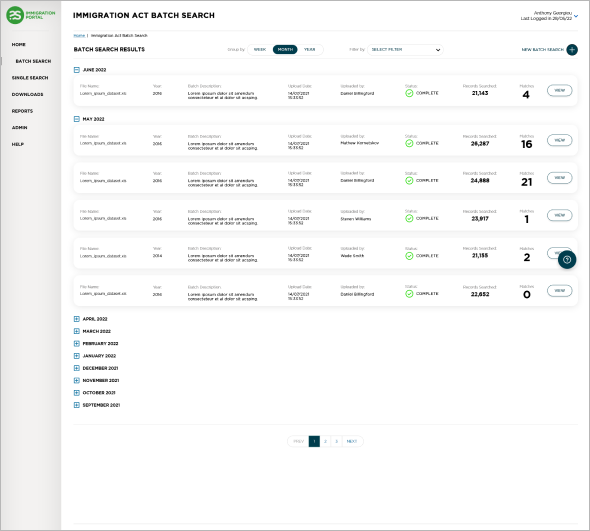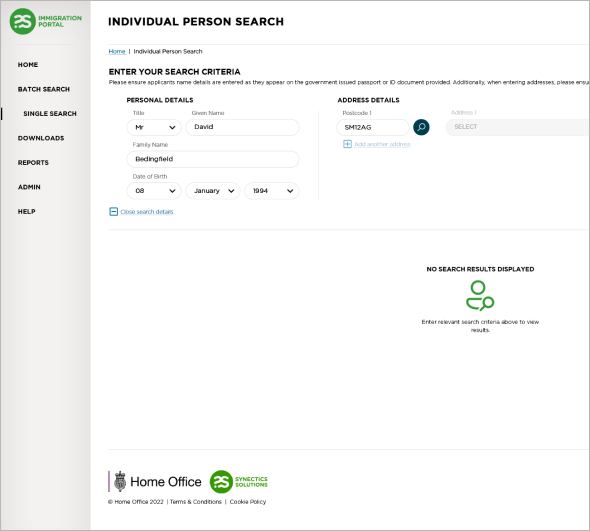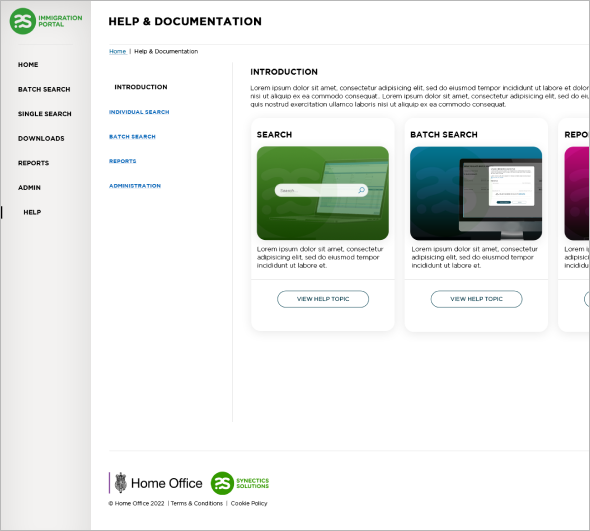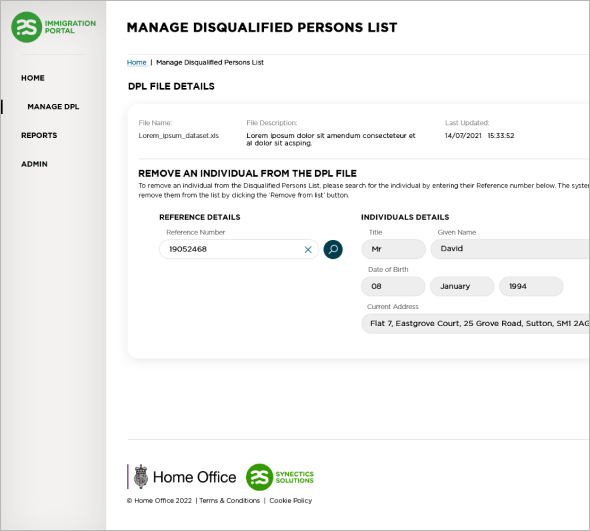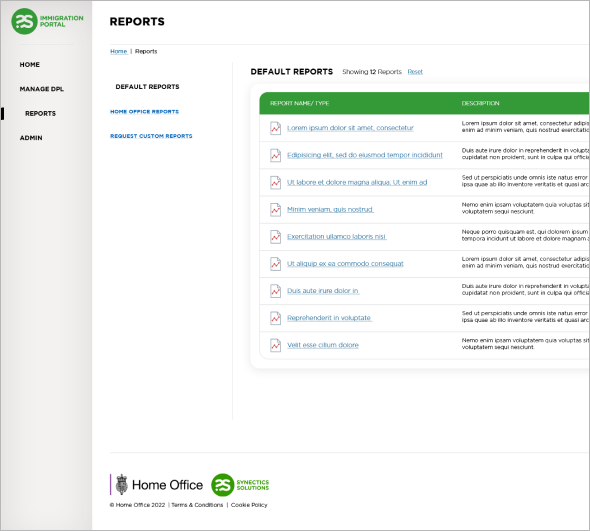
As Lead UX/UI Designer, I was responsible for the design and delivery of a new banking compliance portal for the UK Home Office a tool used by banks to perform real-time eligibility checks when opening new current accounts. The system provided automated verification against immigration legislation, ensuring applicants met the criteria for lawful residency before accounts could be activated. The platform supported both in-branch clerks processing individual applications and batch uploads for online submissions, enabling rapid, accurate compliance checks across multiple channels.
My role spanned the full design lifecycle from discovery and prototyping through to specification, offshore developer coordination, and final product validation. The goal was to replace a deprecated legacy tool with a secure, modern, and user-friendly solution aligned with both Home Office infrastructure and banking-sector operational needs.
The existing solution had become technically obsolete and operationally limited. Its interface lacked clarity, performance was unreliable, and it no longer aligned with updated Home Office data systems or compliance workflows. Banking staff found the process cumbersome, with delayed responses and inconsistent feedback when verifying applicant details. The key challenge was to modernise and simplify the experience while ensuring full regulatory integrity and compatibility with the Home Office’s existing backend systems which were highly constrained by security and data architecture. The new design had to unify these requirements into one consistent, auditable user experience.
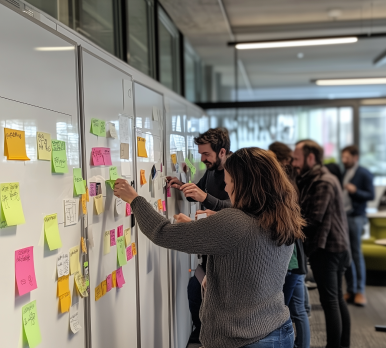
I began by interviewing a wide range of users across multiple banks to understand how they used the existing tool and where it failed. These sessions provided valuable insights into compliance workflows, pain points, and institutional variations between in-branch and online teams. In parallel, I worked closely with the Home Office project team to understand infrastructure constraints, data flow limitations, and API dependencies. Through collaborative workshops, we mapped out the full process from data submission and validation to results handling identifying where usability and reliability could be improved.
I designed and tested interactive prototypes with both banking stakeholders and Home Office representatives, refining interaction flows based on iterative feedback. Once approved, the build was outsourced to an offshore engineering team in Eastern Europe, where I served as product design lead and liaison, providing detailed documentation and a comprehensive, high-fidelity prototype to guide agile implementation.
The final product delivered a secure, modern web portal that integrated seamlessly into both banking and government systems. Key features included: Real-time and batch applicant verification, reducing delays for in-branch and online account applications; Scheduled syncing between bank and Home Office data systems, improving accuracy and uptime; Advanced search and user management tools for branch administrators and compliance officers; A modern, responsive UI with clear status indicators, error handling, and structured feedback messages.
Following final sign-off from the Home Office, I helped oversee the build phase, ensuring high fidelity between design intent and delivery. The resulting solution modernised a critical compliance touchpoint and provided a stable foundation for future expansion.
This project highlighted the value of collaborative design in regulated environments, where both government and private-sector systems must align under strict data and policy constraints. By focusing on clarity, speed, and consistency, the new platform improved confidence in the compliance process for both banks and the Home Office. The outcome was a reliable, scalable tool that replaced a legacy system and brought modern UX principles to an area traditionally dominated by technical complexity. It strengthened cooperation between regulators and financial institutions and ensured that immigration policy was enforced effectively through design-led process improvement.